Security & Gated Enclave Index
A Guide to Sandy Springs Gated Communities
Looking at gated communities in Sandy Springs and wondering how they really work day to day? You want privacy and convenience, but you also want clarity on rules, costs, and what to expect when you have guests, deliveries, or an early commute. In this guide, you will learn how gates and access control operate, what HOAs typically cover, what to review before you buy, and the key questions that help you choose with confidence. Let us dive in.
Sandy Springs Security & Gated Enclave Summary
Sandy Springs sits just north of Atlanta with direct access to the I-285 perimeter loop and the GA-400 corridor, positioning it as an ideal enclave for professionals balancing transit routes between Perimeter Center corporate towers, Buckhead shopping districts, and nearby medical complexes. The submarket provides a blend of historic custom single-family estates and modern lock-and-leave townhome communities.1
The core real estate choice involves balancing enhanced perimeter privacy against daily visitor access logistics. Gated communities inside the 30327, 30328, 30342, and 30350 ZIP codes vary significantly from guarded, staffed gatehouses to automated transponder checkpoints. Understanding road ownership (public vs. private) and long-term HOA asset reserves is essential before contract execution.1,2
Sandy Springs Luxury Gated Subdivisions
Gated Development Name | Dominant Property Styling | Geographic Location Hub | Median Value Bracket | Key Submarket Amenity Feature |
|---|---|---|---|---|
One River Place | Detached custom homes, townhomes, mid-rise condo flats | Powers Ferry Road (ITP Perimeter corridor)3 | $450,000 to $2,000,000+ | Resort clubhouse, two salt-water pools, private gate to the Chattahoochee River.3 |
Brookhaven Lakes | Stately custom single-family estates, grand traditional floor plans | Peachtree-Dunwoody Road & Windsor Parkway | $1,500,000 to $4,000,000+ | Exclusive 46-home enclave setting featuring private neighborhood lake views. |
Gates at Glenridge | Bespoke EarthCraft-certified multi-level luxury townhomes | Glenridge Drive & Abernathy Road core | $600,000 to $1,100,000 | Lock-and-leave townhome footprints positioned minutes from City Springs downtown.1 |
Cambridge | Boutique 3-story brick townhomes, fee-simple models | Morgan Falls Road near Roswell Road axis | $400,000 to $550,000 baseline | Low-maintenance garages close to Morgan Falls Overlook National Park sites.1 |
Submarket financial registry tracking notes: Fulton County Property Records / Zillow & Redfin Luxury Logs 2026
Why Sandy Springs for Gated Living
Sandy Springs sits just north of Atlanta with direct access to I-285 and GA-400, which makes it a strong fit if you split time between Perimeter Center, Buckhead, or the nearby medical hubs. The area blends mature neighborhoods with newer luxury developments, so you can find both estate-style privacy and lock-and-leave convenience. Many buyers here are executives, relocating families who value discretion, and retirees who prefer low-maintenance living.1
The tradeoff to weigh is privacy and control at the gate versus daily convenience. Gate procedures, commute timing on GA-400 and I-285, and visitor access policies will all shape your experience. A quick test drive during peak hours can tell you a lot.
Gate Types and Access Control
Guarded Gatehouses
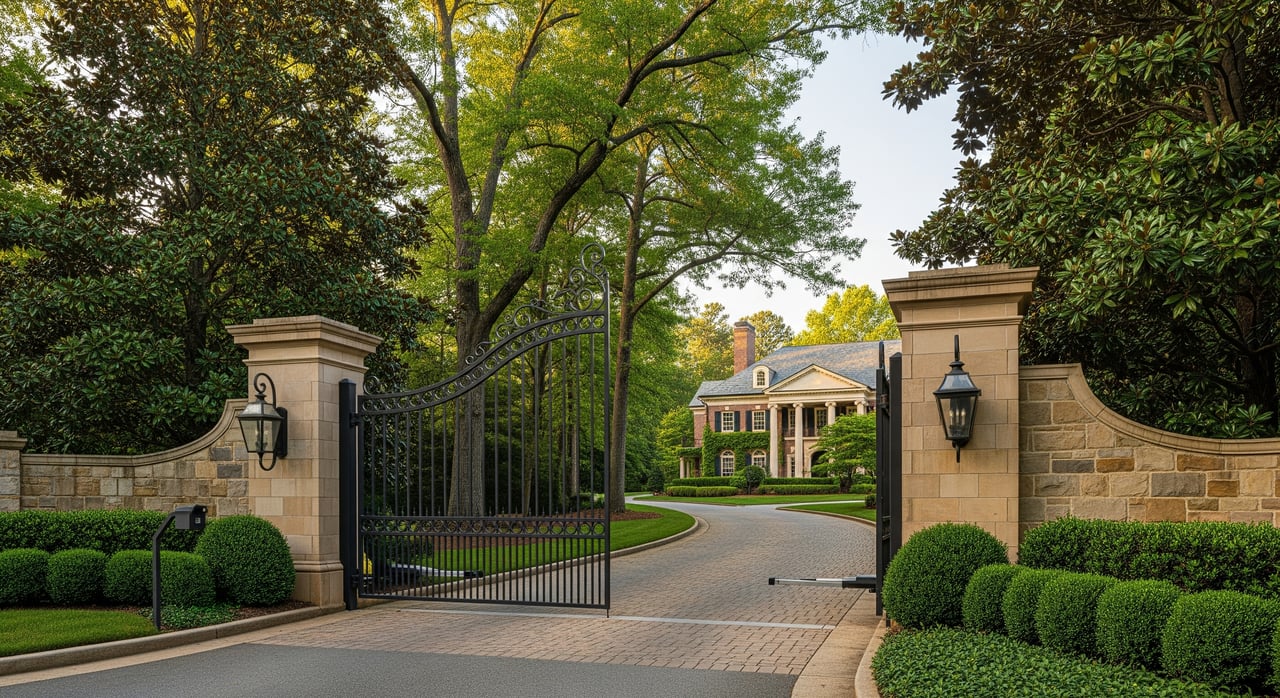
Some larger developments use staffed gatehouses that screen visitors and log entries. This setup can feel more concierge-like and may align with communities that also offer a clubhouse, fitness center, or other staffed amenities. Staffing levels and hours vary by community, which affects both convenience and dues.3
Automated Resident Entry
Automated gates use keypads, card readers, RFID transponders, or remote openers. Many also include an intercom or video call feature so visitors can request access. This approach can be efficient for residents while still providing control over guests.
Combined Systems
High-end neighborhoods often pair a guarded main gate with separate automated lanes for residents and pre-cleared guests. This hybrid can reduce wait times while keeping strong oversight for visitors and vendors.3
Visitor and Vendor Access
Expect separate policies for landscapers, contractors, and deliveries. Some HOAs designate service hours, require temporary codes, or maintain vendor lists. If you have frequent guests or household staff, ask about preregistration and whether a mobile app streamlines entry.
Emergency Access Protocols
Confirm how first responders enter in an emergency. Many communities use systems such as Knox Boxes or automatic gate overrides for EMS and fire. It is reasonable to ask for written confirmation of the policy so you understand how access is handled around the clock.
Technology and Daily Experience
Video Intercom and Mobile Apps
Video intercoms that ring to your phone are increasingly common. You can see who is at the gate, tap to let them in, and sometimes audit recent entries. Ask how long visitor logs are retained and whether the system integrates with your smartphone platform.
Packages, Rideshare, and Food Delivery
Communities may set up package lockers, delivery courtyards, or designated drop zones. Others allow major carriers to enter during certain hours. If you rely on rideshare or regular deliveries, verify how drivers are processed and whether delays are typical.
Guest Registration and Wait Times
Some neighborhoods require preregistration for all visitors, while others allow real-time call-ins. Long lines at peak times can erode the benefit of the gate. The best test is to visit during weekend events or school pickup hours to see the actual flow.3
Amenities and HOA Basics
Typical Amenity Packages
Many luxury gated communities offer a clubhouse, pool complex, fitness center, tennis or pickleball courts, green spaces, and private trails. Some have lake access or are connected to nearby club facilities. More staffing and more amenities typically mean higher dues, so weigh what you will truly use.3
Who Maintains What
HOAs usually handle gate operations, perimeter fencing, common landscaping, private roads, lighting, amenity upkeep, and common-area insurance. Homeowners handle interior maintenance and most exterior items for single-family homes. In townhome or condominium settings, the association may cover certain exteriors, so review the covenants closely.
Architectural Review Standards
Many luxury neighborhoods have an Architectural Review Board (ARB) that oversees exterior changes, paint colors, landscaping, pools, and hardscapes. This helps protect design consistency and property values. If you plan to add a pool or outdoor kitchen, review the process and timelines before you buy.
Costs, Insurance, and Risk
Luxury gated communities often carry higher HOA dues to fund security, technology, and capital maintenance. Healthy reserve funds matter, since gates, roads, and amenities all require long-term planning. Review the latest budget, reserve study, recent assessments, and delinquency rates to gauge financial health.
Master insurance typically covers common areas, while owners carry their own policies that meet HOA requirements. Ask about liability coverage related to gate operations and private roads. If roads are private, confirm maintenance plans, repaving timelines, and how costs are allocated.
Legal and Road Ownership
Gate placement and access must respect public safety requirements. Many gated neighborhoods sit on private roads, which impacts maintenance responsibilities and liability. Review recorded plats, easements, and covenants to confirm what is public, what is private, and how emergency access is assured.
If you are relocating, plan to verify these details directly with the HOA or management company. Clear documentation reduces surprises during ownership and resale.
Due Diligence Checklist
Documents to Review
- CC&Rs, Bylaws, and Rules and Regulations for use restrictions, rental policies, parking restrictions, pet rules, and ARB procedures.
- Most recent HOA budget, comprehensive financial statements, and any independent reserve studies.
- Board meeting minutes for the last 12 to 24 months to spot upcoming capital projects or neighborhood disputes.
- Insurance certificates mapping master hazard coverage parameters and deductibles.
- Security vendor contracts and gate maintenance agreements, including multi-year costs and termination terms.
- Recorded community subdivision plats, title documents, and any specific easements tied to roads and public utilities.
On-Site Inspections
- Observe entry gate operations during peak commute hours and ask to use the guest kiosk system as if you were an incoming visitor.3
- Walk or drive the community grid at night to assess perimeter lighting and security camera coverage.
- Test mobile cell service at the gate and inside the neighborhood, and confirm available broadband fiber options.
- Inspect the physical private road asphalt conditions and request any documented capital maintenance schedules.
Financial and Legal Red Flags
- Recent or repeated special assessments levied across the ownership base.
- High accounting delinquency rates among existing property owners.
- Incomplete, outdated, or drastically underfunded reserve studies.
- Active civil litigation involving the HOA that could result in unexpected liability costs to owners.
Commute, Schools, and Lifestyle Fit
If you commute to Perimeter Center, Buckhead, or Midtown, test the route during your typical drive window. Entry and exit patterns near GA-400 and I-285 can affect both commute time and gate queues. If school access is part of your plan, confirm attendance zones and transportation options directly with Fulton County Public Schools and the HOA.1,2
Lifestyle fit is about more than a gate. Consider how guest policies, court reservations, pool access, and event parking align with how you live. A short trial visit during a busy weekend can be revealing.
Questions to Ask Your Agent
- Who operates the gate, what are the formal hours, and how are staffing schedules or mechanical outages handled?
- How do guests register, and is there an integrated mobile app for residents?
- How are packages, mechanical contractors, rideshare drivers, and food delivery processed at the entry?
- Are the internal neighborhood roads public or private, and who pays for maintenance and long-term repaving?
- What security incidents have been logged in the last 3 to 5 years, and are gate access logs retained?
- What are typical HOA dues and what do they explicitly cover, including capital reserves and hazard insurance?
- Are there strict lease rental restrictions or owner-occupancy minimum percentages?
- What specific ARB approvals are required for pools, architectural additions, or landscape adjustments?
- Are there notable commute backlogs at the entry during morning peak hours?
Frequently Asked Questions About Sandy Springs
What do HOA dues usually cover in Sandy Springs gated communities?
Dues typically fund perimeter gate maintenance, staffed gatehouse personnel, common-area landscaping, private road repaving reserves, amenity upkeep (clubhouses, tennis courts, and pools), street lighting, and master liability insurance. Reviewing the community's independent reserve study is essential to confirm long-term financial stability.1,3
Are roads typically private or public in Sandy Springs gated neighborhoods?
The vast majority of gated developments in Sandy Springs feature private roads. This means the city does not handle asphalt repair, repaving, or stormwater drainage clearing inside the gates, shifting the entire financial liability and infrastructure maintenance cost to the HOA and individual homeowners.1
How do package deliveries and food delivery services work behind a gate?
Developments address this via distinct protocols: some utilize automated keypad delivery codes for major carriers, automated package locker courtyards, or preregistered vendor lists with restricted drop-off hours. Preregistering rideshare or food delivery apps via the community's resident mobile app helps minimize front-gate delays.
Is Sandy Springs located within Cobb County or Fulton County?
Sandy Springs is located entirely within Fulton County, Georgia, forming a prominent city incorporated in 2005. While it borders unincorporated Cobb County immediately to the west, the boundary is separated cleanly by the Chattahoochee River corridor, meaning Sandy Springs real estate maps to Fulton County public school structures and tax assessor codes.1,2
How strict are architectural review board standards in local gated communities?
Architectural Review Boards (ARBs) in luxury Sandy Springs enclaves are highly restrictive. They maintain detailed guidelines governing exterior paint palettes, structural additions, roofing materials, landscaping footprints, outdoor lighting, and custom pool placements to actively preserve uniform design consistency and neighborhood property values.
Structure Your Gated Property Strategy
Selecting the right gated community is part logistics, part lifestyle, and part long-term risk management. You get the most value when someone translates covenants, financials, and vendor contracts into clear choices that fit how you live. As a boutique advisor within Dorsey Alston, Shanna Smith brings local insight, discreet buyer representation, and a white-glove approach that streamlines due diligence and aligns homes with your priorities.
Sources
1. Compass Atlanta Real Estate Regional Geographic & Infrastructure Profile (June 2026 Audit): documents Sandy Springs city incorporation timelines (2005), 20 miles of Chattahoochee National Park riverfront, GA-400/I-285 perimeter alignments, and City Springs downtown walkability.
2. Buckhead.com Sandy Springs ITP Market Tracking Ledger & Fulton County Public Schools Matrix (June 2026 Release): registers average sales pricing data ($1,381,703), 45-day median days on market indices, 98.4% list-to-sale closing margins, and feeder tracks for Heards Ferry Elementary, Ridgeview Middle, and Riverwood Charter High.
3. SandySprings.com Gated Neighborhood Real Estate Indices & One River Place Submarket Review (July 2026): reviews spatial townhome, mid-rise condo flat, and single-family luxury configurations along Powers Ferry Road, tracking resort clubhouse amenities and private river gate access parameters.
4. AtlantaTownhomes Gated Fee-Simple Cambridge Project Log & Becky Morris Sandy Springs Subdivision Index (January 2026 Ledger): records construction layouts for gated townhome communities near Morgan Falls Road (Centex Homes/Cambridge), Abernathy Road (Gates at Glenridge), and custom estate enclaves along Spalding Drive.