Wondering why one Buckhead estate commands strong interest while another lingers, even when the homes look similar on paper? If you are preparing to sell a high-value property, pricing is often the single decision that shapes everything that follows. The right strategy can protect momentum, attract the right buyer pool, and support a stronger result, so let’s look at how strategic pricing works for Buckhead estate homes.
Buckhead Pricing Starts Smaller
Buckhead is not one uniform market, and estate sellers can get in trouble when they treat it that way. The Buckhead area includes several distinct single-family neighborhoods and pockets, including North Buckhead, Peachtree Heights East and West, Peachtree Hills, Peachtree Park, Garden Hills, Pine Hills, and South Tuxedo Park.
That matters because buyers shopping for an estate home are usually comparing a very specific location, not the whole Buckhead label. In March 2026, broad Buckhead data showed a median sale price of $672,500, about 91 days on market, and roughly 3 offers on average, while nearby Buckhead zip code figures ranged much higher, from about $692,912 in 30305 to $1,526,720 in 30327. That spread is a clear sign that a neighborhood-wide average is too broad for estate pricing.
Micro-Markets Shape Buyer Decisions
At the high end, buyers tend to shop by feel, setting, and location pattern as much as by bedroom count or square footage. A home in one Buckhead pocket may compete with only a handful of similar properties, even if dozens of homes are listed elsewhere under the same general area name.
This is why strategic pricing starts with the most relevant micro-market first. You want to know which homes a serious buyer would actually put on the same shortlist as yours today, not which homes happen to fall somewhere on the Buckhead map.
Price Per Square Foot Has Limits
For estate homes, price per square foot is only a starting point. It can help frame the conversation, but it rarely tells the full story when the land, architecture, privacy, and legal constraints differ from one property to the next.
Buckhead’s history helps explain why. Atlanta preservation materials describe notable estate properties with features like long frontage, deep lots, mature trees, and architectural significance tied to early country-estate development. Those characteristics can materially affect value, even when two homes offer similar interior size.
Land Quality Changes Value
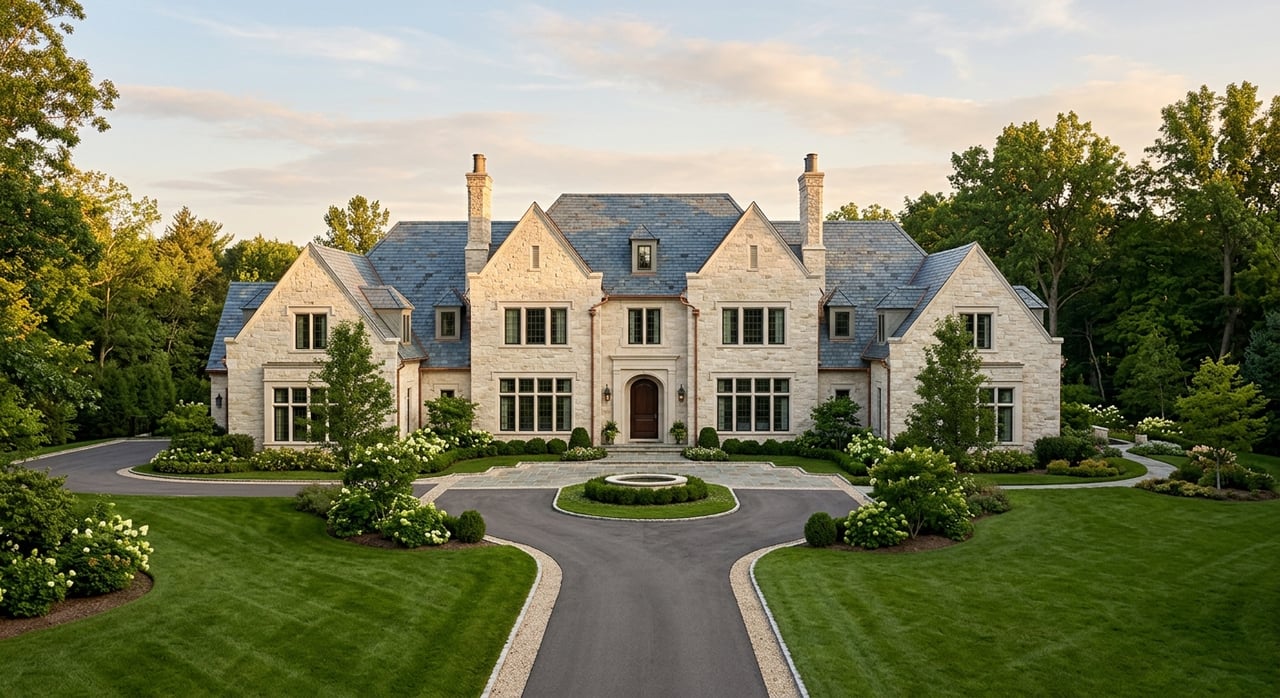
In estate-scale pricing, site quality often matters as much as the house itself. Frontage, topography, privacy, wooded character, driveway approach, and the feel of the parcel can all influence what a buyer is willing to pay.
Current local rules also play a role. Atlanta updated tree protection rules for projects effective January 1, 2026, and the Arborist Division oversees tree preservation and removal on private property. In Tuxedo Park, SPI-25 legislation was designed to preserve historic lot layout and house placement, which means redevelopment flexibility can vary from parcel to parcel.
A mature wooded lot may appeal strongly to one buyer because of privacy and established landscape character. Another parcel may draw interest because it is easier to reconfigure. Those differences make simple square-foot math less reliable for estate homes.
The Best Comps for Estate Homes
The strongest comp set is usually built in a specific order. You begin with recent closed sales in the same micro-neighborhood, then review current active competition, and then look at pending or under-contract properties when that information is available.
This approach matters because closed sales show what buyers have actually paid, while active listings show what sellers are asking your buyers to consider right now. Pending homes can help confirm where fresh demand is leaning, especially in a selective segment where the pool of comparable properties is small.
Same-Pocket Sales Matter Most
For a Buckhead estate, the most useful comparable sale is usually one that appeals to the same buyer profile in the same pocket. Similar site quality, architecture, lot characteristics, condition, and privacy matter more than broad geographic labels.
If your home is architecturally significant or unusually scaled, truly comparable sales may be limited. In that case, the comp search may need to expand beyond the immediate area, but only to properties that would compete for the same buyer attention.
Active Listings Test Your Position
A seller can love the story told by older closed sales, but buyers shop in the present tense. That is why active competition is such an important pricing filter.
If your list price sits above the homes buyers see as realistic alternatives, you may lose momentum early. A strategic launch price should feel credible the moment your home hits the market.
Older Comps Need Adjustments
Estate homes do not always have several recent, perfect matches. Sometimes an older sale is still relevant, but it should not be treated as a fixed benchmark without considering market movement.
Time adjustment matters more when the property is rare or when conditions have changed. A dated sale can still inform pricing if it is adjusted to reflect what the current market is doing rather than what it did months ago.
Why Broad Averages Can Mislead
Metro Atlanta data can offer useful context, but it should not drive estate pricing in Buckhead. In April 2026, the Atlanta REALTORS® Market Brief reported 19,224 active listings, a 4.4-month supply, a median sales price of $436,000, and an average of 19 days on market.
That tells you the broader market still rewards homes that are priced well. But an estate home is judged in a much narrower lane, and its buyer pool is smaller, more selective, and often less influenced by the middle-market pace.
The luxury segment itself is also fragmented. Realtor.com’s 2026 luxury outlook placed the entry point to luxury near $1.2 million and ultraluxury around $5.6 million, reinforcing that pricing strategy at the high end needs more precision than broad-market snapshots can provide.
Launch Price Sets the Tone
Your launch price does more than reflect value. It shapes who sees the home, how quickly buyers engage, and whether the listing enters the market with confidence or hesitation.
The safest approach is usually to price into the buyer search band the property can realistically win today, not at the top of a hopeful historical range. In Buckhead, where broad neighborhood data and estate-corridor activity can diverge, first impressions matter.
Nearby Buckhead zip code pending times have been reported around 33 to 42 days in key corridors. That is much faster than the broader Buckhead figure of about 91 days on market, which is another reason micro-market positioning is so important at launch.
Have a Review Plan Before Day One
A thoughtful pricing strategy includes an adjustment plan before the home goes live. You do not want to decide what to do only after momentum slows.
Instead, set review points based on real signals such as showing activity, buyer feedback, online saves, and changes in competing inventory. If those signals do not support the launch number, a measured response is usually better than waiting too long and letting the market form a negative opinion.
For estate sellers, this kind of planning is especially important in a market with more inventory than a year ago and deliberate luxury buyers. A proactive review strategy protects your leverage and keeps the listing aligned with current demand.
Common Pricing Mistakes to Avoid
Even sophisticated sellers can make pricing decisions based on data that feel logical but do not hold up in the estate segment. Avoiding a few common mistakes can save time and preserve market credibility.
Here are some of the biggest risks:
- Using a Buckhead-wide average as if it were a true comparable set
- Relying on price per square foot as the main valuation method
- Choosing a list price based on the highest past sale rather than current competition
- Ignoring lot characteristics, tree canopy, frontage, and redevelopment constraints
- Waiting too long to adjust if early market feedback does not support the price
Strategic Pricing Needs Local Judgment
A Buckhead estate is rarely interchangeable with another home down the road. The right price comes from studying the specific pocket, the true competitive set, the site itself, and the buyer behavior that defines this segment.
That is where local judgment and presentation strategy work together. When your pricing is grounded in relevant comps and your home is prepared to meet the expectations of discerning buyers, you give the property its best chance to launch with strength.
For estate-scale sellers in Buckhead, that often means a more tailored process from the beginning. If you want a discreet, data-informed opinion on where your home fits in today’s market, Shanna Smith can help you build a thoughtful pricing and presentation strategy.
FAQs
How should you price an estate home in Buckhead?
- Start with recent closed sales in the same micro-neighborhood, then compare your home against active and pending competition with similar lot, architectural, and condition characteristics.
Why is price per square foot less useful for Buckhead estate homes?
- Estate values are often shaped by land quality, privacy, tree canopy, frontage, architecture, and local site constraints, so square footage alone does not capture the full picture.
What comps matter most for a Buckhead luxury listing?
- The most important comps are recent same-pocket closed sales that would appeal to the same buyer, followed by current active listings and relevant pending properties.
How many comps do you need to price a unique Buckhead estate?
- There is no fixed magic number for a unique estate, but at least three closed comps are commonly expected, and the search may need to expand if nearby properties are not truly comparable.
When should you adjust the price of a Buckhead estate home?
- You should review pricing early if showings, buyer feedback, or competing listings suggest the launch price is not matching current market demand.